
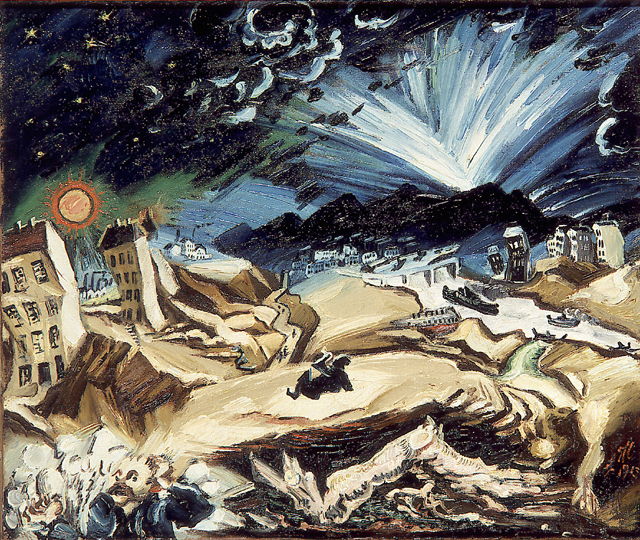
 1913 Ludwid Meidner
The aspect of the landscape was dark and fantastic, the war had erased anything attractive or appealing from the scene, and etched its own brazen features to appal the lonely onlooker.
Ripped haversacks, broken rifles, scraps of cloth, counterpointed grotesquely with children’s toys, shell fuses, deep craters from explosions, bottles, harvest implements, shredded books, battered household gear, holes whose gaping darkness betrayed the presence of basements, where the bodies of the unlucky inhabitants of the houses were gnawed by the particularly assiduous swarms of rats; a little espaliered peach tree despoiled of its sustaining wall, and spreading its arms pitifully; in the cattle byres and stables and barns the bones of livestock still dangling from their chains; trenches dug through the ravaged gardens, in among sprouting bulbs of onions, wormwood, rhubarb, narcissus, buried under weeds; on the neighboring fields grain barns, through whoses roofs the grain was already sprouting; all that, with a half-buried communication trench running through it, and all suffused with the smell of burning and decay.
— Ernst Junger Storm of Steel

 A Leak In The Safe